Common Signs of Dental Disease in Horses
Behavioral, performance, and feeding changes are often the earliest indicators of dental discomfort in horses. Signs may include:
- Dropping feed or quidding (spitting out partially chewed hay or forage)
- Weight loss or difficulty maintaining condition
- Foul odor from the mouth
- Excessive salivation
- Resistance to the bit or head tossing
- Difficulty chewing hay or forage
- One-sided nasal discharge
- Swelling along the jaw or face
- Behavioral or performance changes under saddle
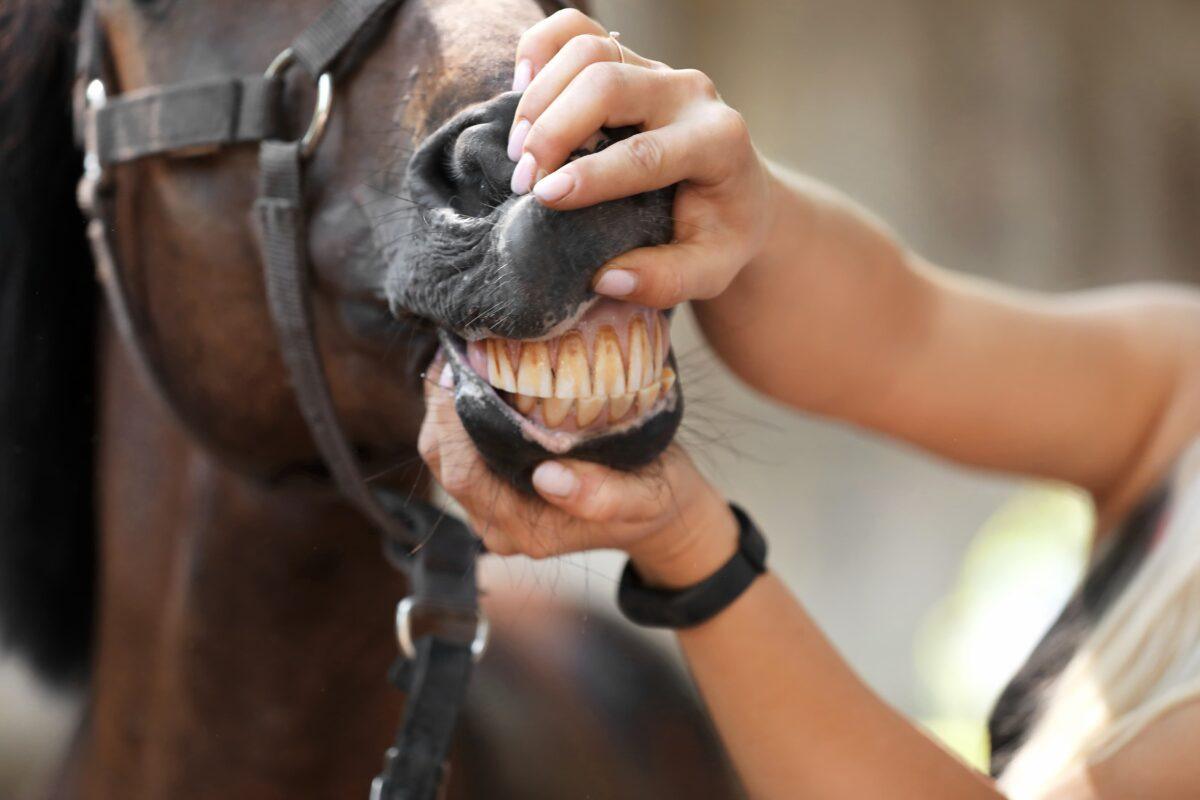
Because horses have continuously erupting teeth, routine dental maintenance is important for preventing painful enamel points and uneven wear patterns.
Common Signs of Dental Disease in Farm Animals
Dental disease in farm animals can affect feed efficiency, body condition, and production long before visible signs become obvious.
Signs may include:
- Gradual weight loss or failure to maintain condition
- Difficulty chewing forage or hay
- Reduced cud-chewing activity
- Dropping feed while eating
- Excessive salivation
- Poor body condition
- Loose, worn, or missing teeth
- Reduced milk production
- Difficulty maintaining weight
Routine evaluations are especially important in aging animals, breeding animals, and animals experiencing unexplained weight or production changes.
Dental Exams for Large Animals
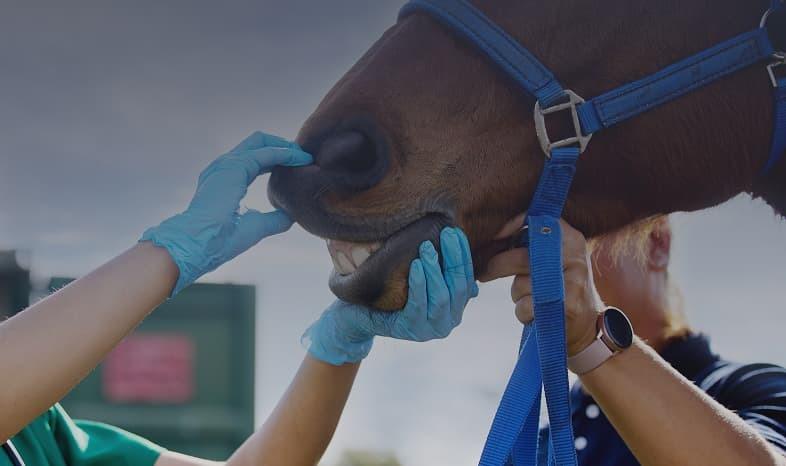
Routine dental examinations are an important part of maintaining the health, comfort, and performance of horses and other large animals. During a dental exam, our veterinary team evaluates the teeth, gums, bite alignment, and overall oral health to identify concerns such as uneven wear, sharp points, periodontal disease, infections, or other abnormalities.
Early detection of dental issues can help prevent pain, improve chewing efficiency, support proper nutrition, reduce feed waste, and promote overall well-being. Regular dental evaluations also allow for personalized recommendations and long-term care planning to help keep your animal healthy and comfortable throughout every stage of life.
Dental Floating for Horses
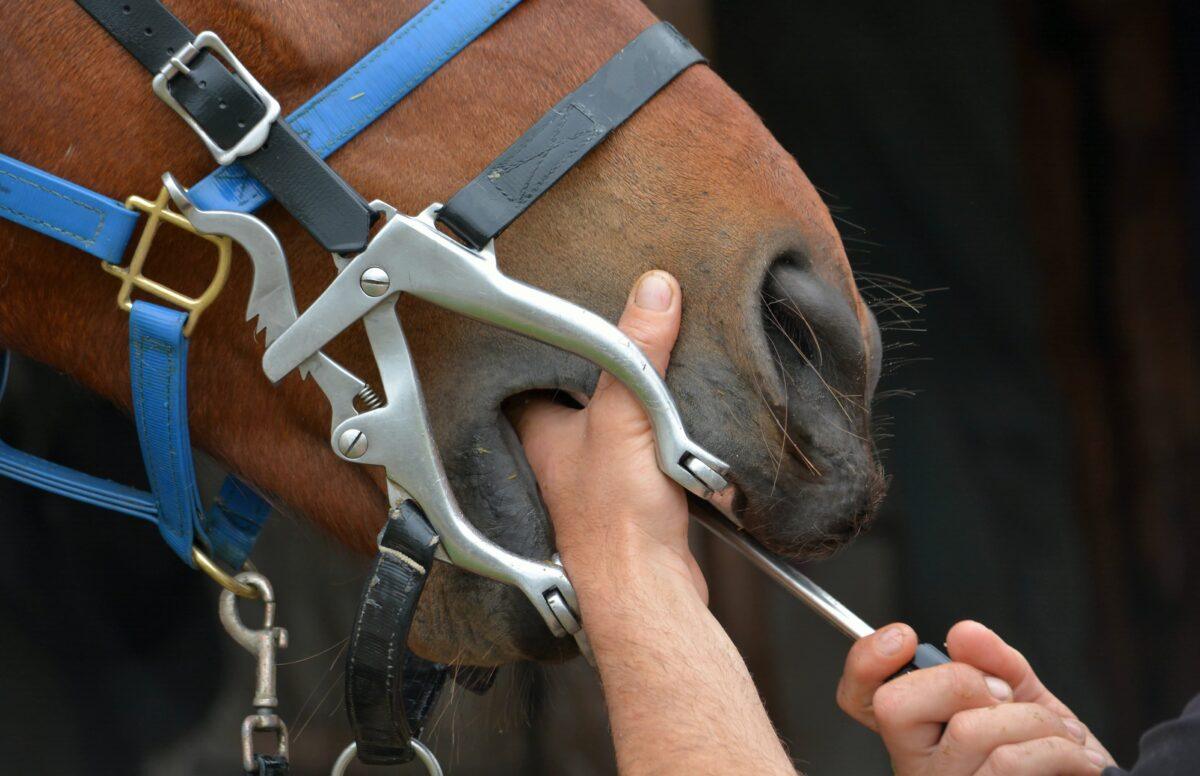
Dental floating is one of the most common routine dental procedures performed in horses. As horses chew in a side-to-side grinding motion, sharp enamel points naturally develop over time. These points can irritate the cheeks and tongue, reduce chewing efficiency, and contribute to discomfort, weight loss, and performance issues.
Routine floating helps smooth sharp enamel points, improve chewing function, and address uneven wear patterns when appropriate. Regular dental care can also improve comfort during riding and help reduce performance-related resistance associated with oral pain.
Most horses benefit from annual dental evaluation and floating, although younger and older horses may require more frequent monitoring depending on their dental condition.
Dental X-Rays for Large Animals
Dental radiographs, or dental X-rays, allow veterinarians to evaluate structures beneath the gumline that cannot be fully assessed during a routine oral examination. Digital dental imaging helps identify issues involving tooth roots, bone structures, fractures, abscesses, infection, and periodontal disease.
Dental X-rays may be recommended for:
- Fractured or damaged teeth
- Facial swelling
- Draining tracts or abscesses
- Loose teeth
- Suspected tooth root infection
- Chronic nasal discharge
- Unexplained oral pain or chewing difficulty
- Advanced periodontal disease
Digital imaging provides detailed diagnostic information that helps guide treatment planning and determine whether procedures such as extraction or advanced dental treatment are necessary.