
Dentistry

Accepting New Patients
Weekend Hours

Healthy Mouths, Healthy Animals

Dental health plays an important role in overall health, comfort, nutrition, and performance. In
horses and farm animals, dental disease often develops gradually and may go unnoticed until
weight loss, behavioral changes, reduced feed efficiency, or performance issues become more
advanced.

At Gulf Coast Equine Hospital, we consider routine dental care an important part of preventive
veterinary medicine. Regular dental evaluations help identify developing issues early while
supporting long-term comfort, feed utilization, body condition, and overall wellbeing.

THE REASON WHY

Your Animal’s Dental Health Matters

Dental disease can affect chewing efficiency, feed intake, body condition, comfort, and overall health across all species. Because horses and farm animals often mask discomfort, signs of dental disease may remain subtle until problems become more advanced.

In horses, uneven tooth wear, sharp enamel points, fractured teeth, and malocclusions can contribute to oral pain, poor feed utilization, weight loss, and performance-related behavioral changes.

In farm animals, worn or damaged teeth can interfere with grazing, cud chewing, and feed processing, which may affect body condition, production, and long-term health.

Routine dental examinations help identify problems early before they progress into more significant medical or nutritional concerns.

Common Signs of Dental Disease in  Horses

Behavioral, performance, and feeding changes are often the earliest indicators of dental  discomfort in horses. Signs may include:

  • Dropping feed or quidding (spitting out partially chewed hay or forage) 
  • Weight loss or difficulty maintaining condition  
  • Foul odor from the mouth  
  • Excessive salivation  
  • Resistance to the bit or head tossing  
  • Difficulty chewing hay or forage  
  • One-sided nasal discharge  
  • Swelling along the jaw or face  
  • Behavioral or performance changes under saddle

Because horses have continuously erupting teeth, routine dental maintenance is important for  preventing painful enamel points and uneven wear patterns.  

Common Signs of Dental Disease in Farm  Animals  

Dental disease in farm animals can affect feed efficiency, body condition, and production long  before visible signs become obvious.  

Signs may include:  

  • Gradual weight loss or failure to maintain condition  
  • Difficulty chewing forage or hay  
  • Reduced cud-chewing activity  
  • Dropping feed while eating  
  • Excessive salivation  
  • Poor body condition  
  • Loose, worn, or missing teeth  
  • Reduced milk production  
  • Difficulty maintaining weight

Routine evaluations are especially important in aging animals, breeding animals, and animals  experiencing unexplained weight or production changes. 

Dental Exams for Large Animals

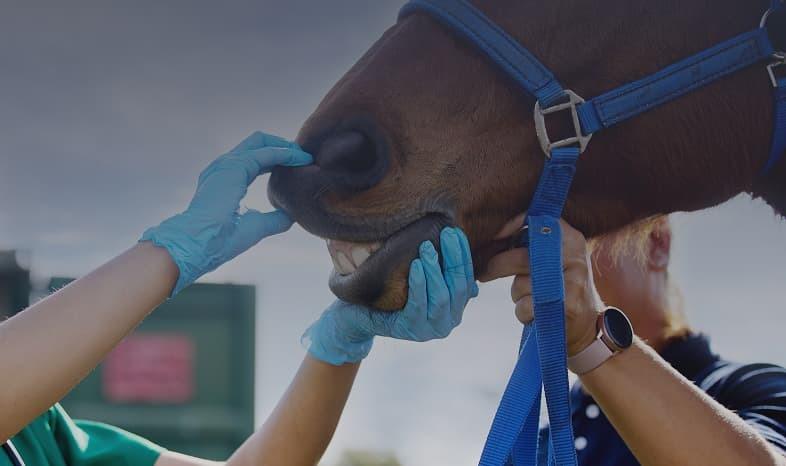
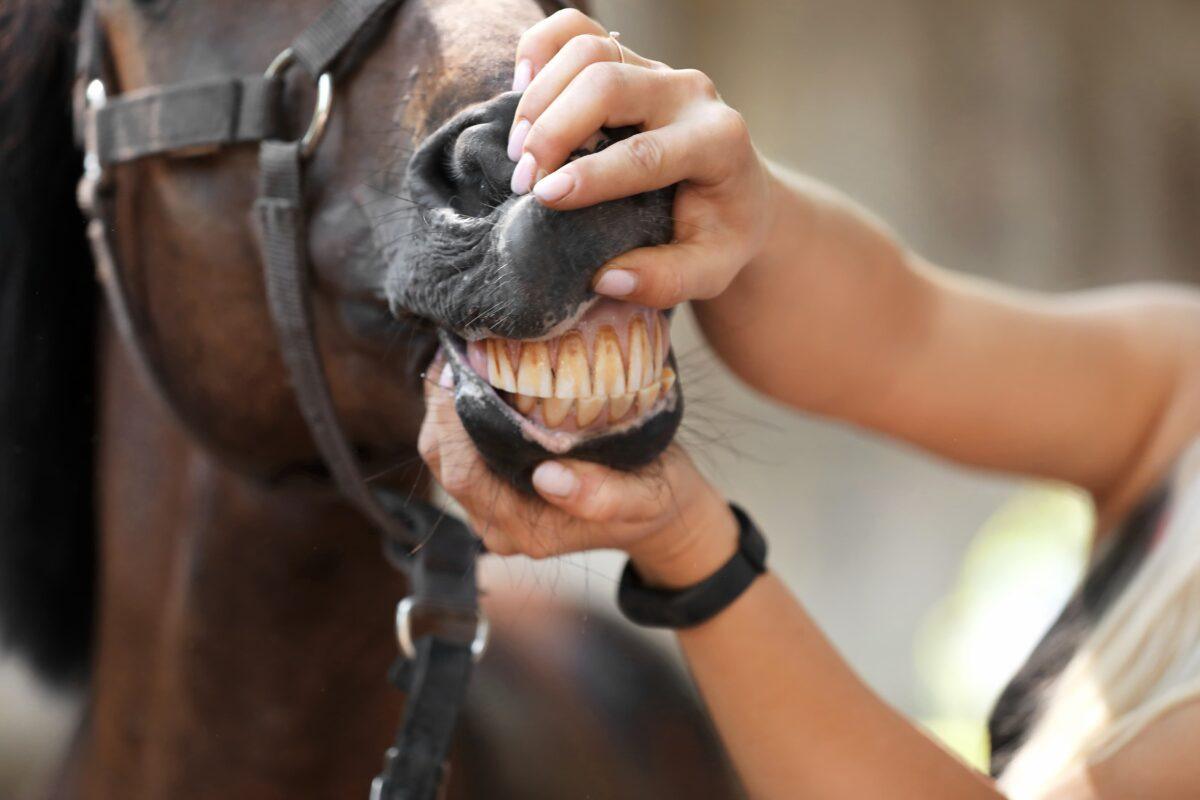
Routine dental examinations are an important part of maintaining the health, comfort, and performance of horses and other large animals. During a dental exam, our veterinary team evaluates the teeth, gums, bite alignment, and overall oral health to identify concerns such as uneven wear, sharp points, periodontal disease, infections, or other abnormalities.

Early detection of dental issues can help prevent pain, improve chewing efficiency, support proper nutrition, reduce feed waste, and promote overall well-being. Regular dental evaluations also allow for personalized recommendations and long-term care planning to help keep your animal healthy and comfortable throughout every stage of life.

Dental Floating for Horses  

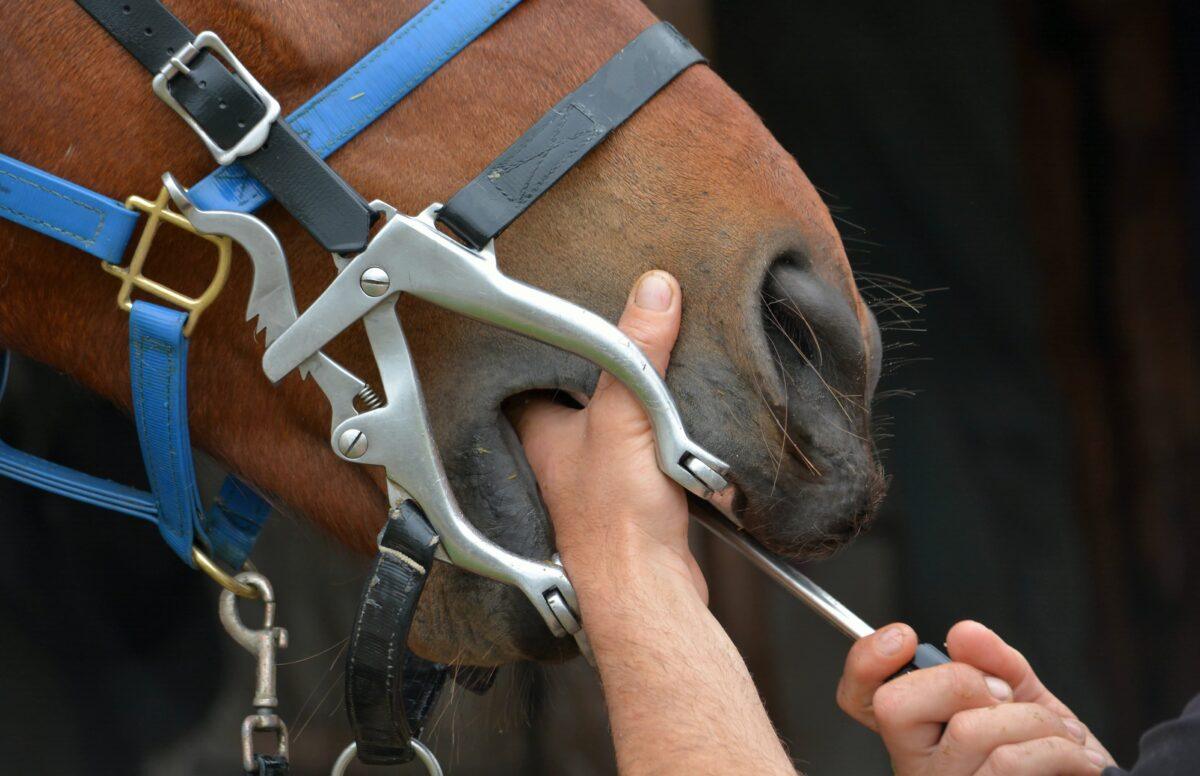
Dental floating is one of the most common routine dental procedures performed in horses. As  horses chew in a side-to-side grinding motion, sharp enamel points naturally develop over time.  These points can irritate the cheeks and tongue, reduce chewing efficiency, and contribute to  discomfort, weight loss, and performance issues.  

Routine floating helps smooth sharp enamel points, improve chewing function, and address  uneven wear patterns when appropriate. Regular dental care can also improve comfort during  riding and help reduce performance-related resistance associated with oral pain.  

Most horses benefit from annual dental evaluation and floating, although younger and older  horses may require more frequent monitoring depending on their dental condition. 

Dental X-Rays for Large Animals

Dental radiographs, or dental X-rays, allow veterinarians to evaluate structures beneath the gumline that cannot be fully assessed during a routine oral examination. Digital dental imaging helps identify issues involving tooth roots, bone structures, fractures, abscesses, infection, and periodontal disease.

Dental X-rays may be recommended for:

  • Fractured or damaged teeth
  • Facial swelling
  • Draining tracts or abscesses
  • Loose teeth
  • Suspected tooth root infection
  • Chronic nasal discharge
  • Unexplained oral pain or chewing difficulty
  • Advanced periodontal disease

Digital imaging provides detailed diagnostic information that helps guide treatment planning and determine whether procedures such as extraction or advanced dental treatment are necessary.
Protect Their Health

Prevention Is the Best Medicine

Preventative dental care is one of the most effective ways to support long-term health, comfort, performance, and production in horses and farm animals. Many dental conditions progress gradually over time, and early intervention is often easier and less invasive than treating advanced disease.

At Gulf Coast Equine Hospital, we recommend routine annual dental evaluations for most horses and farm animals, with more frequent monitoring for younger, aging, or high-risk animals when needed.

FAQs

Why Do Horses and Farm Animals Need Routine Dental Care?  

Dental disease can affect chewing efficiency, feed intake, comfort, body condition, performance,  and production. Routine examinations help identify problems before they become more  advanced.  

How Often Should My Large Animal Have a Dental Exam?  

Most adult horses and farm animals should receive a dental evaluation annually. Younger,  aging, or high-risk animals may benefit from more frequent monitoring depending on their  condition.  

How Often Does My Horse Need a Dental Float?  

Many horses benefit from annual floating, although some may require more frequent care based  on tooth alignment, wear patterns, and individual dental health.  

Does My Horse Need Sedation for Dental Procedures?  

Yes. Sedation of a full-mouth speculum allows for a safer and more thorough dental examination  and treatment while reducing stress for the horse and improving safety for handlers and  veterinary staff.  

What Are Signs of Dental Disease in Farm Animals?  

Signs may include weight loss, difficulty chewing forage, reduced cud chewing, dropping feed,  excessive salivation, poor body condition, loose teeth, or decreased production.  

Can Dental Disease Affect Performance and Production? 

Yes. Dental disease can interfere with feed processing, body condition, comfort, milk production, growth, and athletic performance depending on the species and severity of disease. 

Why Are Dental X-Rays Important? 

Dental X-rays allow veterinarians to evaluate structures beneath the gumline and identify conditions such as root infection, fractures, abscesses, bone loss, and periodontal disease that may not be visible during a standard examination.

We Offer Flexible Payment Options

We believe every animal deserves top-notch care—and that cost shouldn’t stand in the way. That’s why we offer flexible payment options to help you plan and pay for your animal’s care with confidence. Click the button below to learn more about how we handle payments and animal insurance at our hospital.

Connect With Us

Veterinary Care, Your Way

Our goal is to make veterinary care convenient and accessible for all animal owners in Summerdale and Surrounding Communities. Choose the contact method that works best for you.

251-989-6213
Call or Text us

During our operating hours, call or text our hospital number and our team will be happy to assist you

Get the App
Download our app

Our app helps you stay on top of your animal’s care without missing a beat.

Call Us
Walk-In Visits

Walk-ins are welcome upon availability! To help avoid wait times, we recommend calling ahead when possible.